
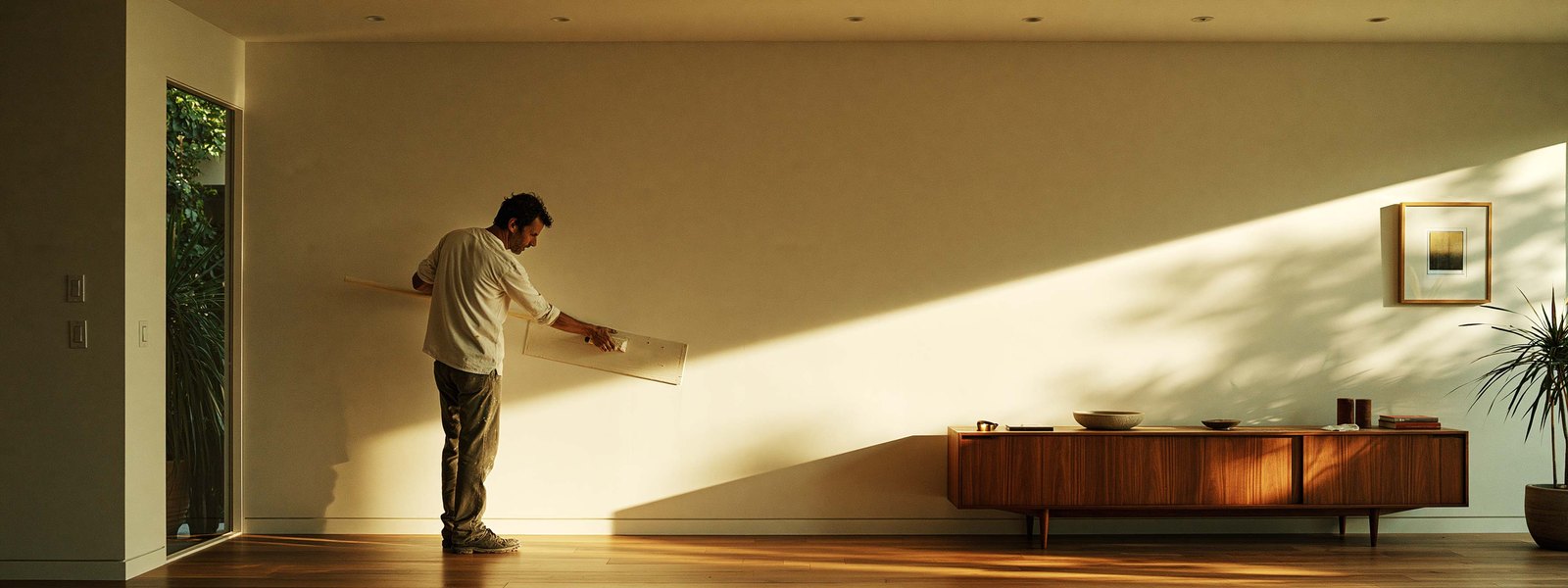
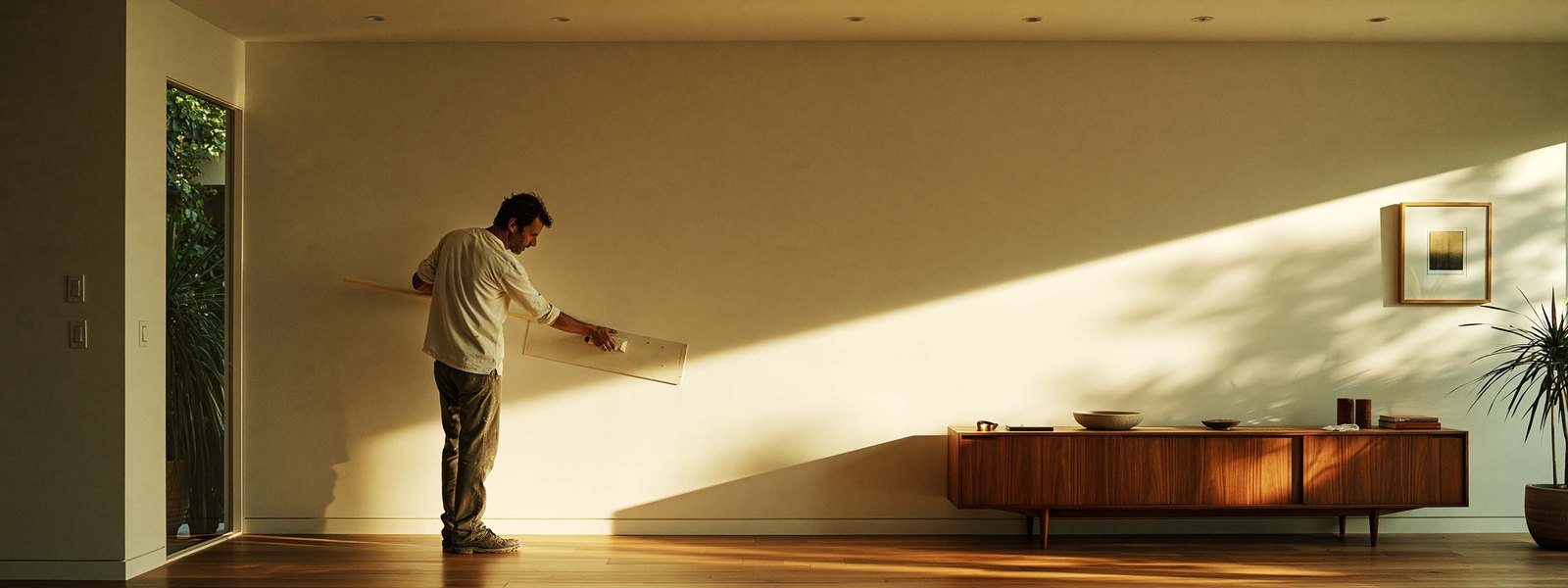
A drywaller smoothing a long living room wall with a finishing trowel in low afternoon sun

Drywall Repair in Sacramento, CA

Most cracks have a simple explanation. Once we know what's behind yours, one repair is all it needs, and it stays closed.

A drywaller working along a wide living room wall in late afternoon light, a walnut sideboard beside him

A Crack With a Known Cause Is a Crack That Stays Closed

Most of the cracked walls we're asked to look at have a reassuring story behind them, and the majority of Sacramento cracks turn out to be the ordinary kind. Sacramento Expert Drywall starts by figuring out which kind yours is, because a wall you understand is a wall that gets fixed once. Drywall and sheetrock are the same board, by the way. Sheetrock is just a brand name that everybody picked up, so whichever word you grew up with, you're in the right place, and drywall repair in Sacramento is what we do all day.

The ground here has a lot to do with it, and that's good news rather than bad. Much of this valley sits on expansive clay, which takes on water through a wet winter and gives it up over five dry months. That seasonal movement travels up through the house and arrives at the weakest point in a wall, usually a corner above a door. It's normal, it's well understood, and it's the single most common answer to why it cracked.

So the visit starts with a look rather than a quote. Which way the line runs, what's on the far side of that wall, and whether anyone has patched it before tell us nearly everything. That takes a few minutes standing in the room with you. We diagnose it first and price it second, you get both in the same conversation, and the estimate is free either way.


Two Kinds of Crack, and the Common One Is the Easy One

Nearly every crack we're called about is one of two things, and from where you're standing they look much alike. One is the wall surface doing what wall surfaces do. The other is the wall passing on news from somewhere else. The repair itself is similar. What differs is what we do first, and telling them apart is quick.

A fine line at a corner is the ordinary one

Doors and windows are openings, and an opening is where a wall has the least to hold on to. A thin line running up and away from a top corner, no wider than a pencil mark, is what we run into most often in this city, and the easiest to sort out. Houses here move a little every year and always have. Thin, short, and it stops: that's a cosmetic repair and a good day for you.

A recurring crack simply has a root cause still to find

The interesting one is the recurring crack. Somebody closed it, painted it, and some months later the line is back in the same place. That's not poor workmanship, and it's not a reason to think less of your house. It means nobody diagnosed why it cracked, and that's the part we're good at.

A structural crack usually announces itself by its shape. It runs on a diagonal rather than straight up, it's wider at one end, and it carries on past the ceiling line. Sometimes a door in that room has begun to stick. When we see that, we tell you what we think is moving and what to do about it, before any figure is discussed.

How We Read a Crack in About Five Minutes

Which direction the line runs, since a diagonal crack and a vertical one usually have different causes
Whether the width holds steady from end to end, or one end is wider than the other
Whether it ends at the ceiling or keeps going up and across it
Whether anyone has closed this line before, and how long that repair lasted for you
Whether a nearby door or window has started sticking at one particular time of year
What's on the far side of that wall, because very often that's what explains the crack

What Usually Explains a Crack That Comes Back

You're owed a real explanation, and there almost always is one. Most recurring cracks in this city trace to one of a few root causes, and none of them is the wall itself, because the surface is only the messenger. Finding it is usually a walk around the outside of the house rather than anything complicated indoors, and it's included in the free estimate.

Close view of a drywaller's hands skimming compound onto a wall beside a door frame

A big tree in the yard is drinking

A mature valley oak draws a serious volume of water out of the ground in an August week, and it takes it from wherever it can reach. On expansive clay that dries one side of a house faster than the other, and uneven drying is foundation movement in slow motion. If the cracks are all on the tree side, that's a useful clue rather than a worry, and it points straight at the fix.

Watering can do the same thing in reverse. A soaker line along one wall and nothing on the other three keeps that side swollen while the rest of the ground shrinks, and a downspout emptying beside the slab does it too. None of that is a drywall problem, which is the best news on this page: it's usually cheap to put right, and once it is, your repair holds.

What settling means, and when it finishes

Settling is the word everyone reaches for, and it has a precise meaning. A house presses into its ground for the first couple of years, the weight finds its level, and the movement stops. New builds in Elk Grove and Roseville often crack in year one and then behave themselves for good, and those repairs last.

A house of twenty years isn't settling. Whatever moves there is seasonal movement, or it's drainage, or it belongs to a foundation contractor rather than to us. We'll tell you which we think it is, and point you at the right trade if it belongs to somebody else. Either way, you'll get a straight answer.

What Decides Your Price

Two cracks that measure the same, on the same street, can end up priced differently, and it's rarely the crack itself that makes the difference. It's the work that has to happen around it. A single line in an open hallway is quick work. The same line behind a stair rail or above a cabinet run is a longer afternoon. Either way, you'll hear which kind you have before we start.

We price the diagnosis and the repair as two separate lines, so it's clear what you're paying for. If the cause turns out to belong to another trade, we'll let you know at the estimate.

The Right Month to Close It, and Why We Track That for You

Occasionally the best answer is to close a crack a few months from now rather than this week, and when that's true we say so. On clay ground a line closed at the right end of the year stays closed and still looks right the following summer, which is the whole point of paying for it. That's a scheduling decision, not a delay, and it's ours to manage rather than yours to remember.

So we make a note of it, and we come back to you at the right time. You don't have to watch the wall, mark anything, or keep a diary. If your crack is one of the few where the month makes a difference, we'll tell you which month and put you in the calendar for it.

Helpful to mention when you call, if you know it

  • About when you first spotted it, and what the weather was like around then
  • Any earlier repairs on it, and how long those repairs lasted
  • Whether it goes straight up or runs at an angle
  • Anything you know about what's behind that wall
  • Whether any door or window in that room has begun to stick
  • Any changes outside, like a tree planted or taken out, new irrigation, or a downspout

None of that is required. If you don't know any of it, we'll work it out when we get there.

One thing we'll always tell you

If we think a wall may open up again, we'll tell you before we close it, not afterward. Having that conversation early is what keeps you from paying twice for the same repair, and most people are glad we brought it up. When it applies, we'll walk you through why and what your options are, and the decision stays yours.

Questions Homeowners Ask Us About Cracks

What will my drywall repair cost?

You're bracing for a price, so here it is. Most single repairs run $250 to $500, and several small ones cleared in one trip usually come to $400 to $900 together. Bigger areas price by the foot, roughly $3 to $8 per square foot. What moves yours inside those bands isn't the size of the damage. It's whether we can reach it standing on your floor, and whether your wall carries a texture that has to be sampled first. Matching a sprayed texture is often the longer half of the day. More of the figures are on the FAQ page.

When is replacing a section better than repairing it?

Sometimes starting fresh is simply the better choice for a section of wall. If the same area has been repaired several times, a new section gives you a clean surface, consistent finish, and a better-looking result. We'll tell you honestly whether replacing it is the better value or whether a repair will still look great.

If something is still shifting behind that wall, we'll address the underlying problem first. A new section deserves a solid foundation, and we'll make sure the work we recommend is built to last.

Can a handyman or a painter do this instead?

For a small, straightforward repair on a flat wall, a good handyman is exactly the right call, and we'll happily say so. The difference shows on two jobs. One is a wall whose finish has to be blended in. The other is a crack that has come back before. The first needs somebody who does that blending every day, and the second needs the cause found rather than the line filled. If yours is the simple kind, you'll hear that from us too.

Why does the same crack keep coming back?

Because the repair closed the line and something is still moving behind it. Filler is strong, but it has no say in what the ground is doing. A recurring crack is telling you the root cause hasn't been found yet, and that's a solvable problem. It's usually drainage, a tree, or the season, and all three have answers.

Is my crack structural or cosmetic?

Shape and history tell you most of it. Thin, short, straight up from a door or window corner, and unchanged for a year: cosmetic, and a straightforward repair. Diagonal, wider at one end, crossing the ceiling line, or back after being closed: that's a structural crack, and it's worth diagnosing before it is worth filler. We can usually tell you which it is from a photograph.

Do cracks in a Sacramento house mean foundation trouble?

Usually not. Expansive clay moves every house here a little, and a few fine lines a year is normal for this housing stock. The ones worth a foundation contractor's opinion are doors that catch in one season, cracks that widen noticeably at one end, and floors that have begun to feel uneven. If we see any of those, we'll say so plainly and point you to the right trade.

Other Drywall Work Worth a Look

Drywall Patching

Dents and doorway dings you already know about, closed up and gone in one visit.

Small damage, one visit, done properly →

Texture Matching

Getting the finish around a repair to match, so the patch doesn't show.

How we blend a repair into your wall →

Water Damage Drywall Repair

Soaked walls and ceilings, put back together once whatever let the water in has been dealt with.

Dry it first, and how long that takes →

Ceiling Repair

Sagging and cracking overhead, where gravity is working against the repair.

Why ceilings cost more than walls →

Drywall Repair in Roseville

Newer builds off Blue Oaks, where year-one cracking is the usual call.

Newer houses, engineered framing, first-year cracks →

Drywall Repair in Elk Grove

Flat ground, young subdivisions, and clay that works on a yearly cycle.

Clay ground, and what it does to a newer house →
A contractor with a clipboard talking with two homeowners in the sunlit hallway of an older house

Get Your FREE Estimate

Take a photo of the crack and send it over, or call and describe it. Either one usually tells us what caused it.

A drywall crack that keeps coming back has a cause, and we find it.

Call Us Now! 916-584-9660