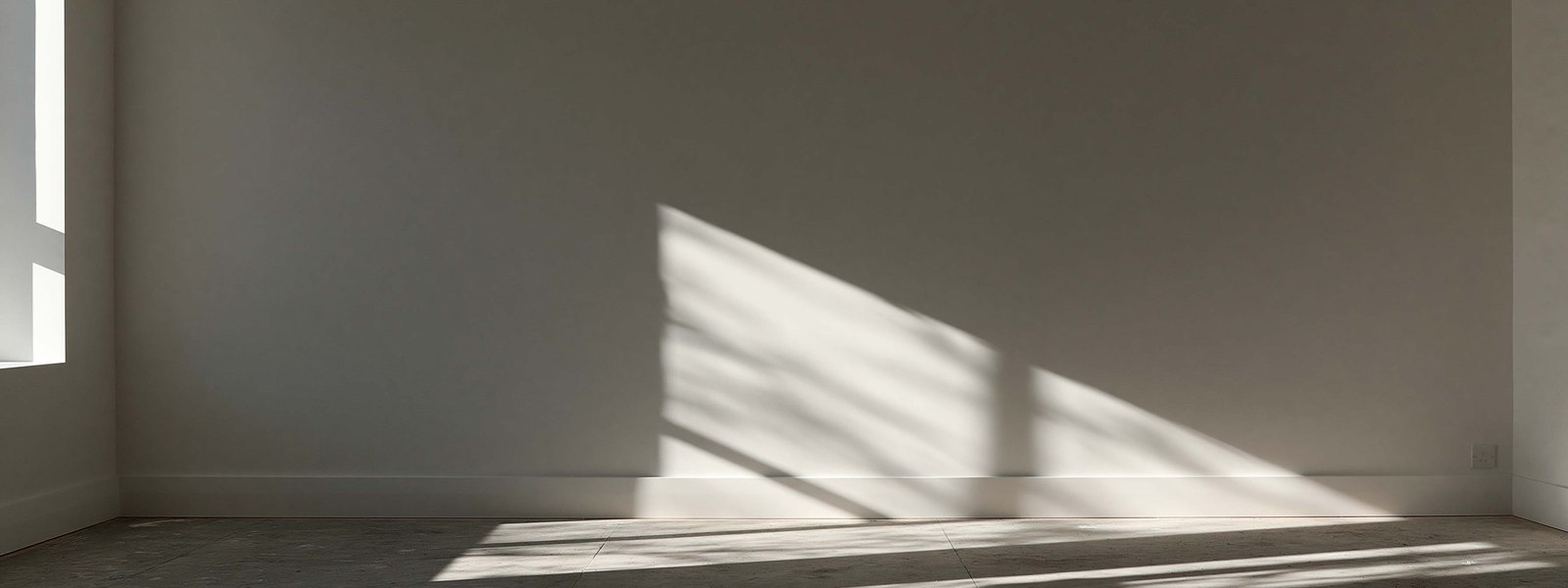
A finished wall lit only by a hard diagonal of window light falling across it

Drywall Taping and Finishing in Sacramento, CA

There are five levels of finish and your quote is priced to one of them. Almost nobody tells you which.

A wide finished wall with a sharp wedge of sunlight across it, the surface reading dead flat behind the light

Every Quote We Write Names the Level It Is Priced To

There's a published standard for how smooth a wall is finished, and Sacramento Expert Drywall puts the level on the quote so you can see it. Most people have never been shown that, and it makes two quotes easy to compare. It's a published standard with a level attached, and the level changes both what you pay and what your walls look like under a lamp.

Most residential work in this city is level 4, and level 4 is right for most rooms in your house. What you're unlikely to be told is that one or two walls probably want level 5 and the rest don't. Paying for level 5 everywhere is the commonest way to spend money on this trade and see nothing for it.

That's drywall taping and finishing in Sacramento in two paragraphs. The rest of this page is what the levels mean and which of your walls falls where.

What the Levels Actually Mean

The scale runs from level 0 to level 5 and the industry publishes it, so this is a specification and not an opinion. Three of the six matter in your house.

Level 3, level 4 and level 5, in plain English

Level 3 is two coats over the joints and the fastener heads barely buried. It's a surface for a heavy wall covering, and if your quote is priced to it, ask why.

Level 4 is the residential standard: three coats over the joints, fastener heads covered, everything sanded flush and left as a flat finish for your paint. In a normally lit room it's invisible, and anything above it is money you'll not see again.

Level 5 adds a thin skim over the whole surface, so your wall is one continuous material instead of joints smoothed into a sheet. It exists for one reason: light. Under a raking light, or a paint with shine in it, level 4 shows its joints faintly and level 5 doesn't.

The butt joint is why the standard exists at all

Where two factory edges meet, the manufacturer has already tapered them, so the joint sits in a shallow trough and fills flush. Where two cut ends meet there's no taper, so everything in that seam builds up above your wall and has to be spread wide enough that the eye never catches the hump. Done in three coats it's invisible. Done in one it's a shadow across your wall for as long as you own the house.

What Decides the Level Your Room Wants

Where your windows are, since a single window at one end of a room rakes light down the wall
What paint is going on, because anything with a sheen reports what flat paint hides
Whether the room has downlights close to the wall, which do the same job as a low sun
How large the unbroken wall areas are, since a wall broken up by openings hides more
Whether it's a ceiling, which almost always gets harder light than the walls beneath it
What the room is for, because a hallway and a formal dining room are judged differently

Three Coats, and Why the Third One Is the One That Gets Skipped

Every coat is thinner and wider than the one before it. The first fills, the second builds, and the third is almost entirely about spreading the edges out until nothing announces where the seam is.

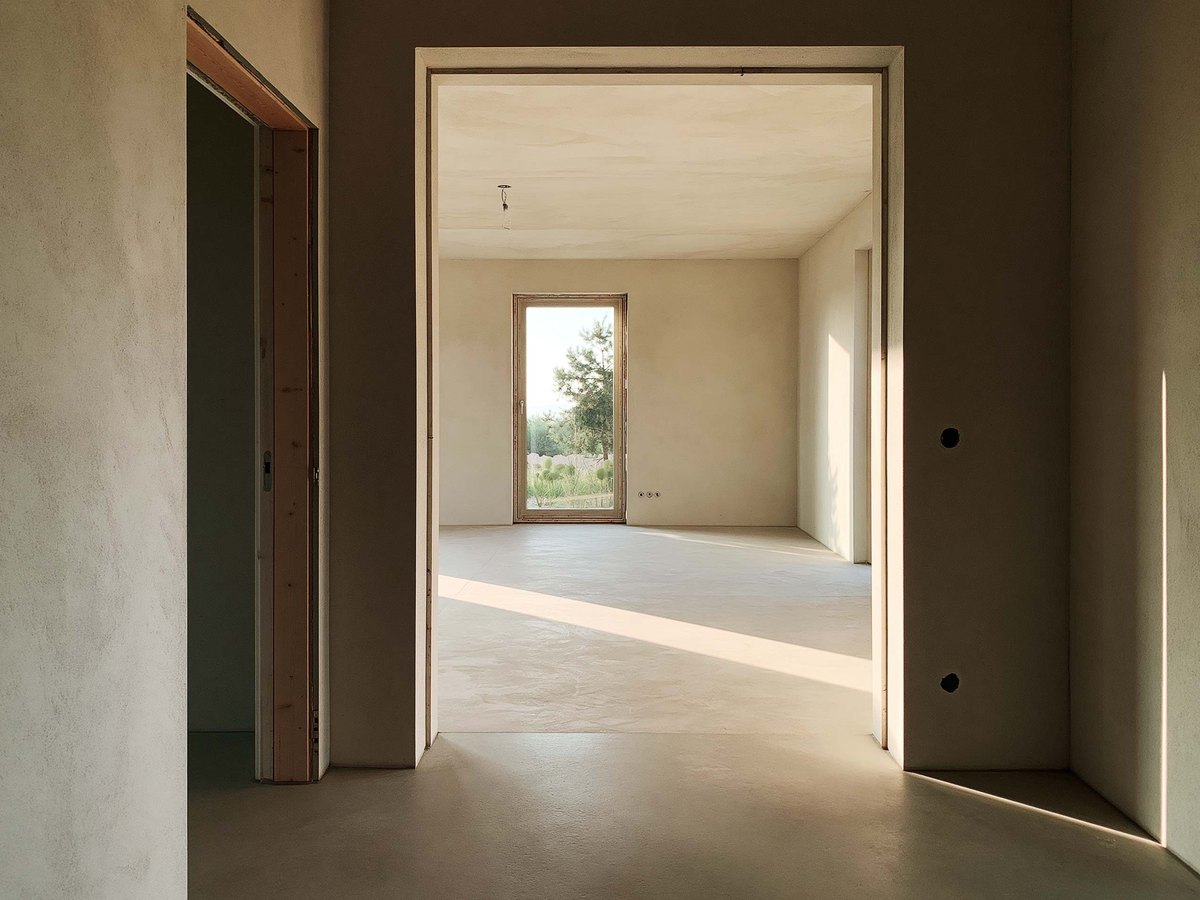
Looking through a doorway into a newly finished empty room, sunlight lying across the floor toward a tall window

Drying time is the schedule, not the work

Each coat has to dry all the way through before the next goes on, which is what makes this a multi-day job and not a long afternoon. In a Sacramento July that can be overnight. In January, with your house closed up and the air heavy, it can be two days a coat, and a schedule that ignores that is one somebody is going to break.

Sanding is where the money is earned and the reputation is lost

A joint built well needs very little taken off it. A joint built badly can't be saved at this stage, only disguised, and the disguise lasts until somebody turns on a lamp at the end of your hall.

Done properly it's a light pass with a bright light held flat to the wall, looking for shadows and not for lumps. That check is the difference between a wall you never think about and one you notice for a decade.

What Decides Your Price

Square footage sets your base and the level sets everything above it. Level 5 across a whole house is a large step up, because a skim over every surface is a separate operation over the whole area and not an extra pass on the seams.

After that it's the shape of your rooms. A big square room with few openings is quick. A stairwell, angled walls, or anything with a lot of corners is slow, because corners are hand work and can't be hurried.

What You Should Get at the End

A finished surface is a specification, so you can check it, and you should before anybody asks you for the balance.

Walk it with a light before you sign anything

Take a work lamp or a phone light, hold it flat to the wall so the beam runs along the surface, and walk the room. Anything that will show up after the paint shows up now. Ten minutes, and it's the most useful thing you can do on this trade.

What we hand over

The condition your walls should be in

  • Joints and fasteners flush, with no ridge you can feel by running a hand across them
  • Corners straight down their whole length, checked against a straightedge and not by eye
  • No sanding marks scored into the face of the surrounding surface
  • A surface that's dust-free and genuinely paint-ready, not one your painter has to fix first
  • The level you paid for, applied to every wall it was quoted for
  • Any wall we think needs a level above what you bought, named out loud rather than quietly left

That last one usually saves you money. If your dining room has one long wall facing a west window and the rest of the house doesn't, you want that before the paint goes on.

What level of finish do I need?

Level 4 in most rooms. Level 5 on walls raked by light from a single window, on anything you're painting with a sheen, and often on ceilings under downlights. Level 5 everywhere is money spent where you'll never see it.

What's the difference between level 4 and level 5?

Level 4 finishes the joints and fastener heads and leaves the rest of the sheet as it came. Level 5 skims the whole wall so the surface is one material. Under even light you can't tell them apart. Under a raking light you can tell instantly.

Why does it take several days?

Because each coat has to dry before the next goes on, and that's weather and not effort. Summer here's fast. A wet January in this valley can double it, and anybody promising you three coats in a day is planning to skip one.

Can you finish work somebody else started?

Regularly. If the first coats were built badly, the fix is taking them back rather than adding to them, and that runs longer than starting clean. You hear which one you have before we quote it.

Do I need to prime before painting?

Yes, and it matters more than people expect. A finished seam and the sheet around it drink paint at different rates, so an unprimed wall shows its seams as a difference in sheen. Your painter knows this. Ask anyway.

Is level 5 worth it for a ceiling?

More often than for walls. Your ceiling catches light from the fixtures below it at exactly the angle that finds a joint. On a large flat white ceiling under downlights, that's the one place we would spend the extra ourselves.

Drywall Installation

The board going up, which happens before any of this.

Read more →

Texture Matching

What goes over the finished surface when a room isn't staying smooth.

Read more →

Garage Drywall

One room with its own code requirement and its own finish standard.

Read more →

Drywall Repair

Existing walls, and working out what opened them up.

Read more →

Folsom

Larger builds and higher expectations, where level 5 comes up most.

Read more →

Rocklin

Newer Placer County houses with big glazed walls and hard light.

Read more →
A painter kneeling to roll deep green paint onto a finished wall, drop cloth across the floor

Get Your FREE Estimate

Every room needs a different level of finish. We'll tell you yours, free.

Your walls hold up under a lamp at the end of the hall.

Call Us Now! 916-584-9660